Compound interest is usually described as “interest on interest”. That’s accurate, but it undersells it. The easiest way to see what it really does is to watch the numbers.
The table
Imagine you put 10,000 — in any currency — somewhere that pays 8% a year, and you leave it alone. Here’s what happens with simple interest, where you earn 8% of your original 10,000 each year, compared with compound interest, where each year’s interest is added to the pot and then earns interest itself.
| After | Simple interest | Compound interest | Difference |
|---|---|---|---|
| 1 year | 10,800 | 10,800 | 0 |
| 2 years | 11,600 | 11,664 | 64 |
| 5 years | 14,000 | 14,693 | 693 |
| 10 years | 18,000 | 21,589 | 3,589 |
| 20 years | 26,000 | 46,610 | 20,610 |
| 30 years | 34,000 | 100,627 | 66,627 |
What the table shows
At first, almost nothing happens. After two years the difference between the two columns is just 64. After five years it’s 693.
Then compounding takes over. By year 30, compound interest has turned 10,000 into more than 100,000 — nearly three times what simple interest produces. About two-thirds of that final amount is interest that was earned on earlier interest.
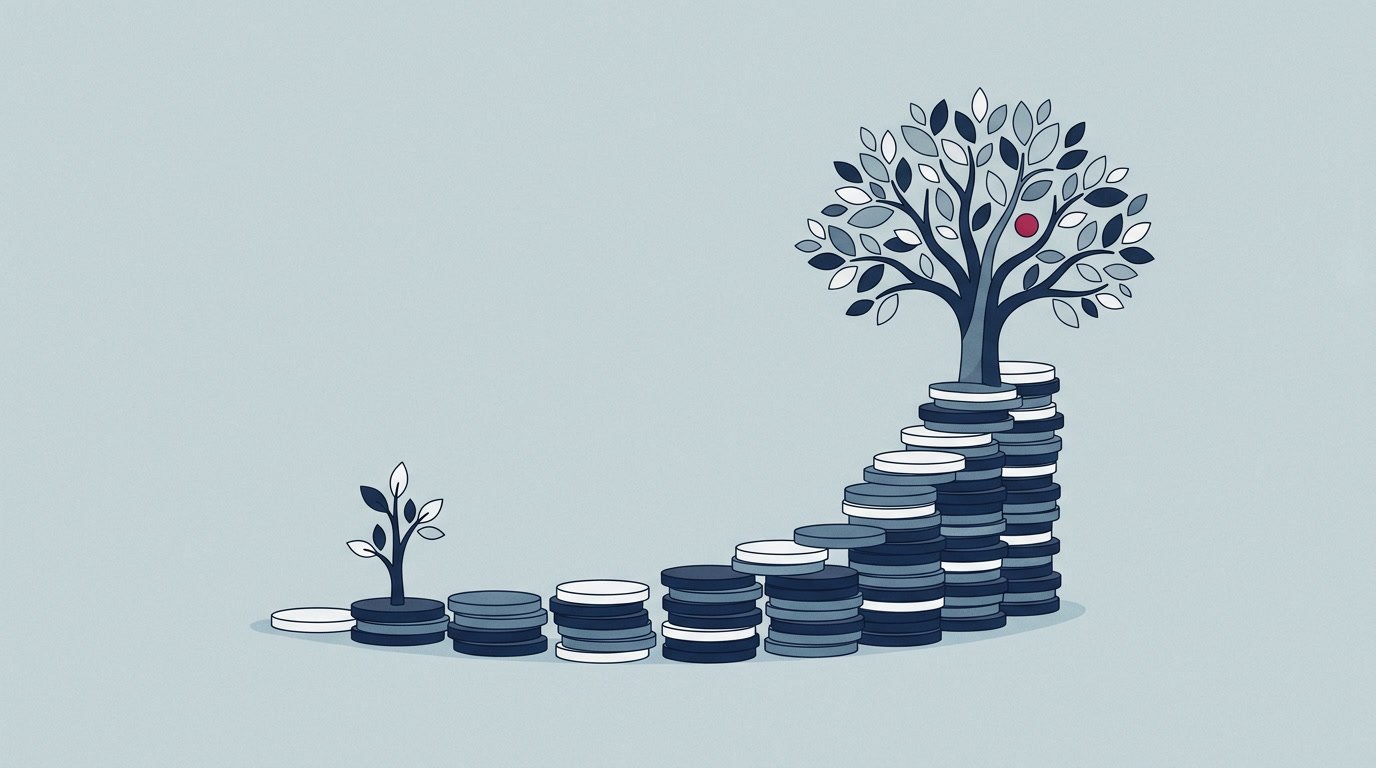
That’s the shape of compounding: slow, then fast. Most of the growth arrives at the end, which is why time matters more than almost anything else.
Why starting early matters so much
Put 10,000 away once, at 8% a year. Leave it for 35 years and it grows to about 147,853. Leave it for 25 years — starting ten years later — and it grows to about 68,485. Those ten extra years more than double the result, without adding a single extra rupee, pound or dollar.
The rule of 72
A handy shortcut: divide 72 by the yearly interest rate to estimate how many years it takes for money to double.
| Rate | Rule of 72 says | Actual time to double |
|---|---|---|
| 4% | 18 years | 17.7 years |
| 6% | 12 years | 11.9 years |
| 8% | 9 years | 9.0 years |
| 12% | 6 years | 6.1 years |
It’s an estimate, but a good one at everyday rates — close enough to do in your head.
How often interest is added matters a little
Interest can be added yearly, monthly or even daily. The more often it’s added, the sooner it starts earning interest of its own. At 8% over ten years, 10,000 grows to 21,589 if interest is added once a year, and to 22,196 if it’s added monthly.
That’s a real difference, but much smaller than the difference time makes. When you compare accounts, look for the effective annual rate — called the AER in the UK and the APY in the US — because it already accounts for how often interest is added.
It works against you, too
Compounding doesn’t care which side of the account you’re on. Unpaid credit card balances and many loans compound as well, usually at far higher rates than savings earn. Leave a balance unpaid and the interest starts earning interest — for the lender.
Two honest caveats
- 8% is an example, not a promise. Savings accounts pay a stated rate. Investments such as shares don’t pay a fixed rate at all: their value goes up and down, and past returns don’t guarantee future ones.
- Inflation eats into growth. If prices rise by 5% a year, money growing at 8% is only getting just under 3% richer in real terms.
This article explains how compound interest works. It isn’t financial advice and can’t take account of your circumstances. For decisions about saving, borrowing or investing, speak to a qualified adviser.